Solutions / Photovoltaic Cleaning

Repeatable UAV cleaning strategies for rooftop and utility-scale solar assets.

Build the cleaning plan around panel layout, tilt, soiling, water logistics, operating space, and the ability to repeat consistent coverage across the site.

Primary Target Photovoltaic Arrays
Planning Focus Coverage & Repeatability
System Logic Cleaning Kit + Ground Unit
The operating challenge

Large-area cleaning changes the objective.

For photovoltaic assets, the challenge is not only reaching the panel. The system also needs repeatable passes, controlled water delivery, predictable coverage, and a workflow that can be reproduced across the site.

  • 01
    Array layout

    Row spacing, panel orientation, roof obstacles, and total coverage area influence route planning.

  • 02
    Panel geometry

    Tilt, mounting structure, and surface orientation affect spray angle, working distance, and coverage.

  • 03
    Soiling & cleaning target

    Dust and other deposits influence water behavior, cleaning method, and the number of passes required.

  • 04
    Water logistics

    Water points, hose distance, site size, roof access, and available ground space affect the operating system.

What defines the mission

Six site inputs shape the PV cleaning plan.

A photovoltaic cleaning configuration should begin with the array and its operating environment, not with a fixed equipment package.

01 / SITE TYPE

Ground or rooftop

Ground-mounted and rooftop arrays create different access, safety, and ground-support requirements.

02 / LAYOUT

Array arrangement

Row spacing, roof zones, module grouping, and obstacles determine the structure of the cleaning route.

03 / PANEL ANGLE

Tilt & orientation

Panel angle and orientation influence spray direction, working distance, and coverage consistency.

04 / SOILING

Contamination level

The type and level of soiling help determine cleaning method, water demand, and expected number of passes.

05 / WATER

Supply & distance

Water source, hose distance, and available pressure influence the ground-side configuration.

06 / FREQUENCY

Cleaning cycle

One-off projects and recurring maintenance may require different priorities in setup and repeatability.

Cleaning strategy

Design for repeatable coverage, not a one-off flight.

The value of a PV cleaning workflow comes from the ability to move across the array with predictable spray behavior and a route that can be repeated during future maintenance cycles.

01

Map repeatable passes

Build a cleaning route around panel rows, orientation, obstacles, and the usable operating area.

02

Control spray geometry

Match nozzle behavior, working distance, spray direction, and water flow to the panel angle.

03

Plan the water route

Coordinate supply position, hose travel, and available water access with the aircraft operating path.

04

Design for repeat use

Organize the setup so future maintenance cycles can reproduce the same operating logic more easily.

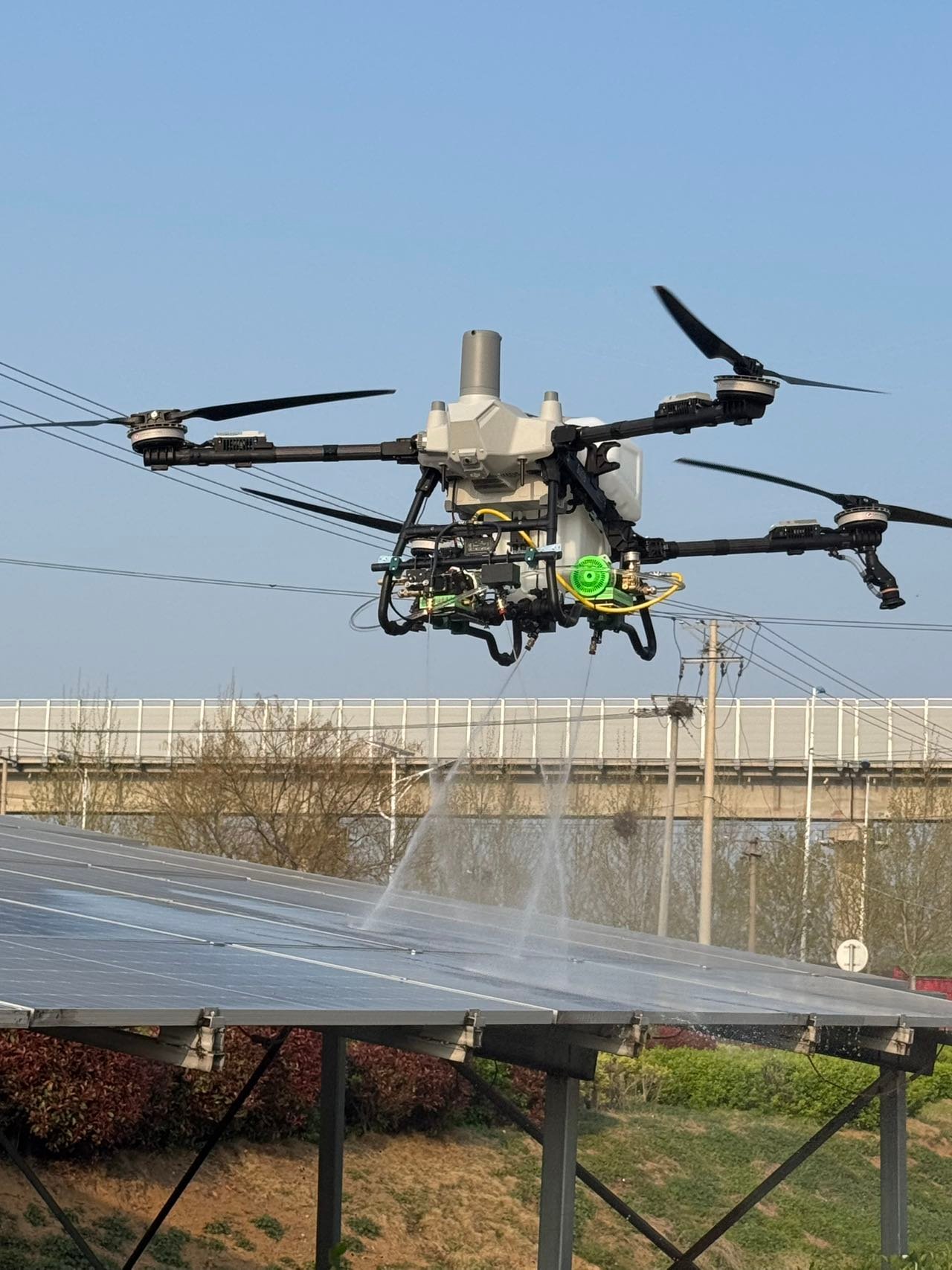
Photovoltaic UAV cleaning system
System view Aircraft, cleaning kit, water supply, hose routing, and ground support work as one repeatable field system.
System architecture

A PV cleaning system should be designed for repetition.

The objective is not simply to clean one panel. The system should support repeatable coverage across the site while coordinating the airborne and ground-side equipment.

01

UAV platform

The aircraft provides movement, positioning, and payload support across the array.

02

Cleaning kit

Spray hardware is matched to panel angle, target contamination, and required coverage pattern.

03

Water supply

Ground-fed delivery can support longer cleaning tasks and reduce dependence on onboard liquid capacity.

04

Site support

Hose routing, equipment placement, water access, and operator workflow support practical field deployment.

Typical applications

One cleaning logic does not fit every solar site.

Site type, panel arrangement, access conditions, and cleaning frequency determine how the workflow should be configured.
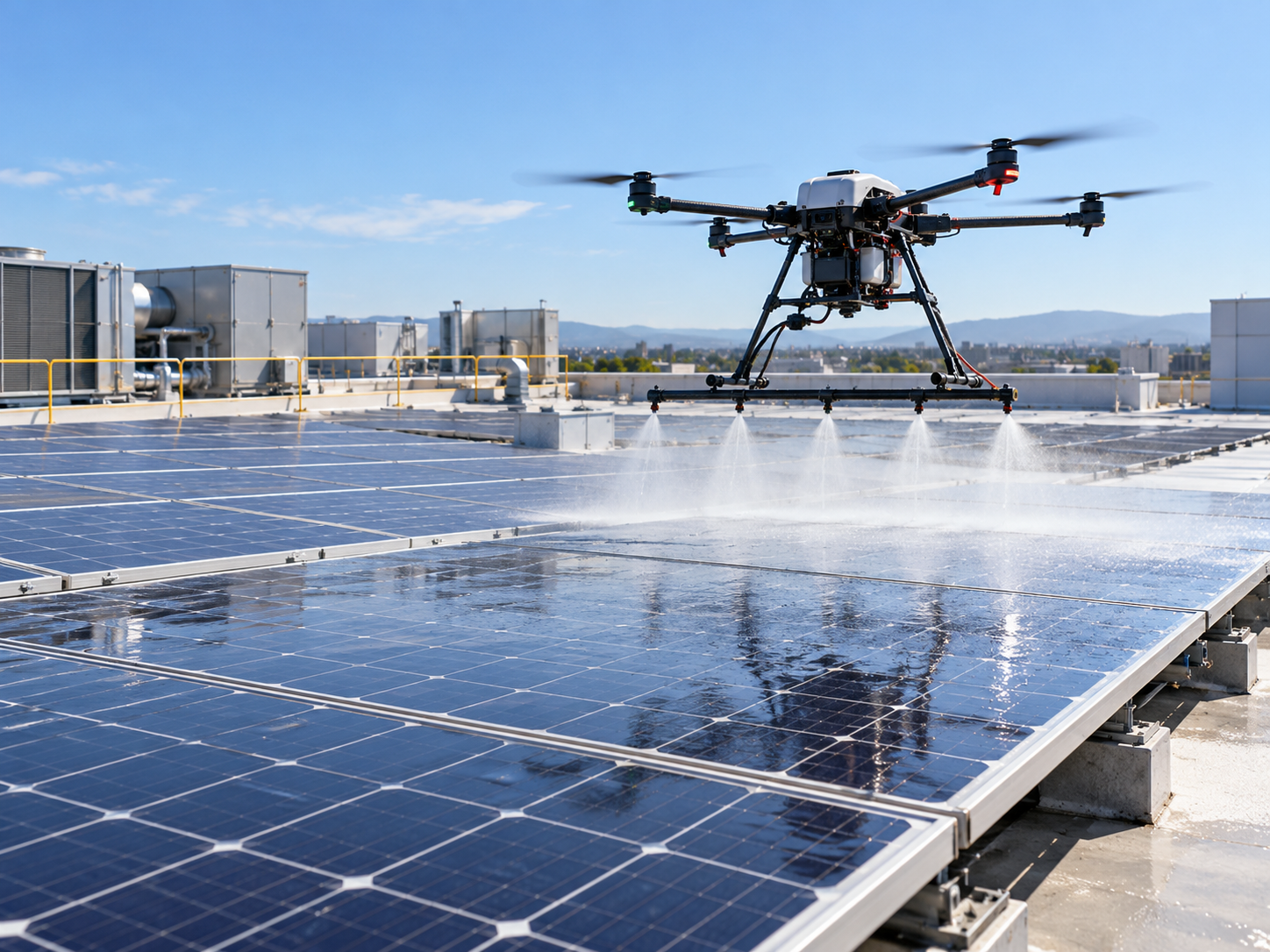
Utility scale photovoltaic cleaning
Utility-scale solar

Ground-mounted arrays

Cleaning strategies for larger fields where coverage consistency, water logistics, and deployment efficiency matter.
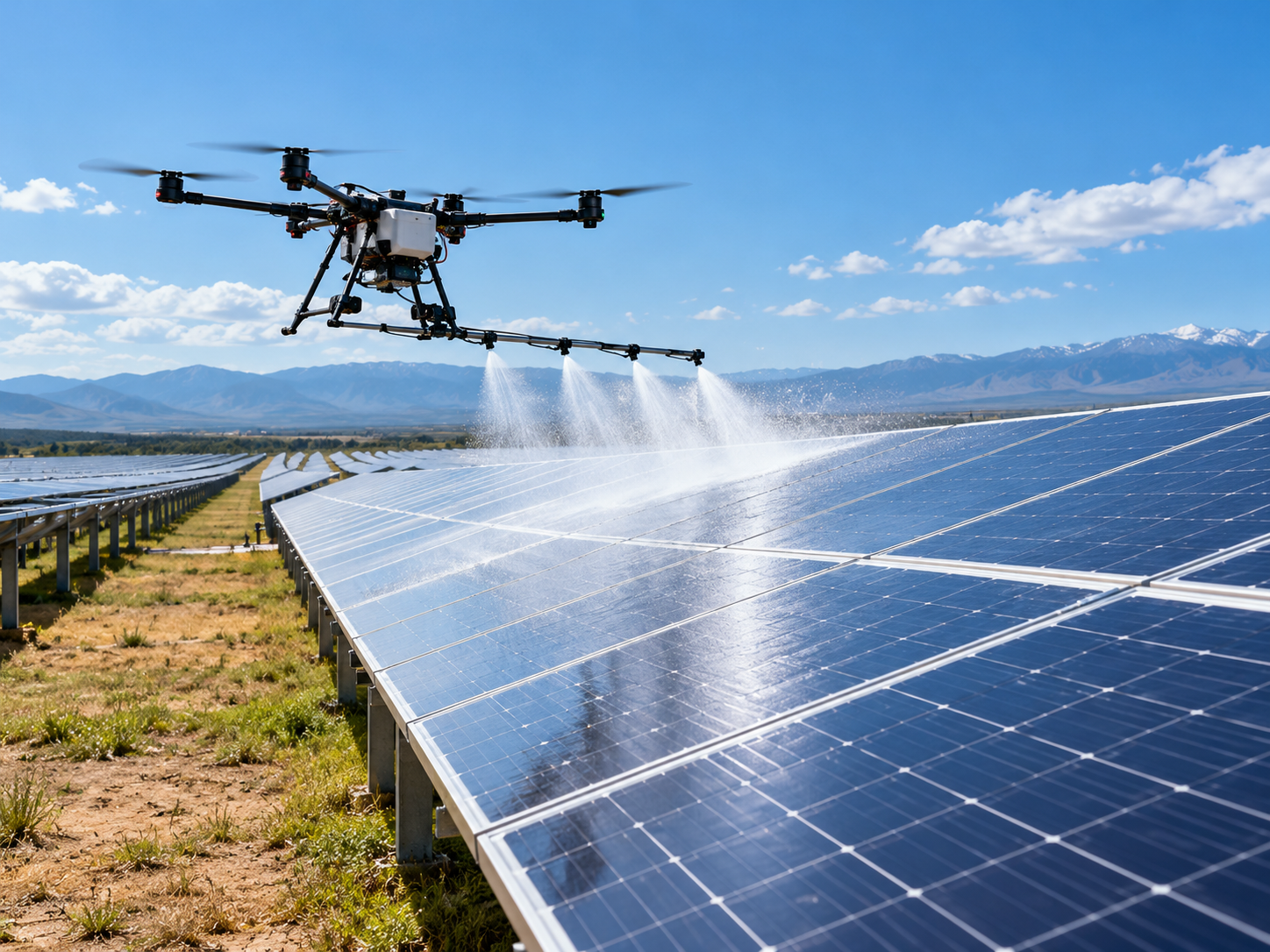
Rooftop photovoltaic cleaning
Commercial rooftops

Rooftop photovoltaic

Remote cleaning where roof access, obstacles, panel zones, and limited working space affect the operating plan.
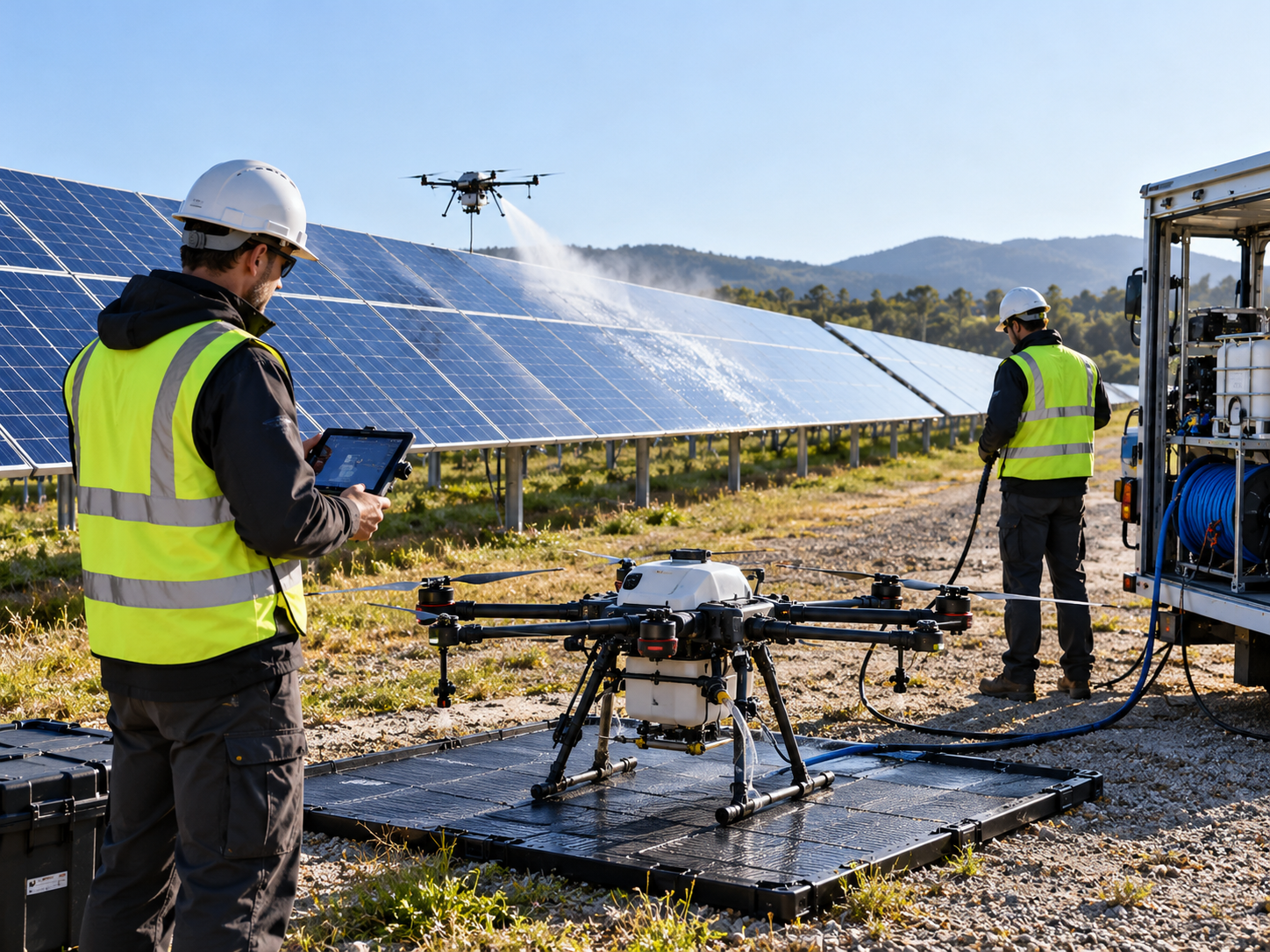
Recurring photovoltaic maintenance
Recurring maintenance

Repeatable site deployment

System planning designed to make regular cleaning cycles easier to organize, repeat, and scale across the site.

Related Products

Core equipment for a complete UAV cleaning system.

Combine the aircraft platform, cleaning payload, and ground-side supply equipment according to the building, cleaning target, and operating environment.
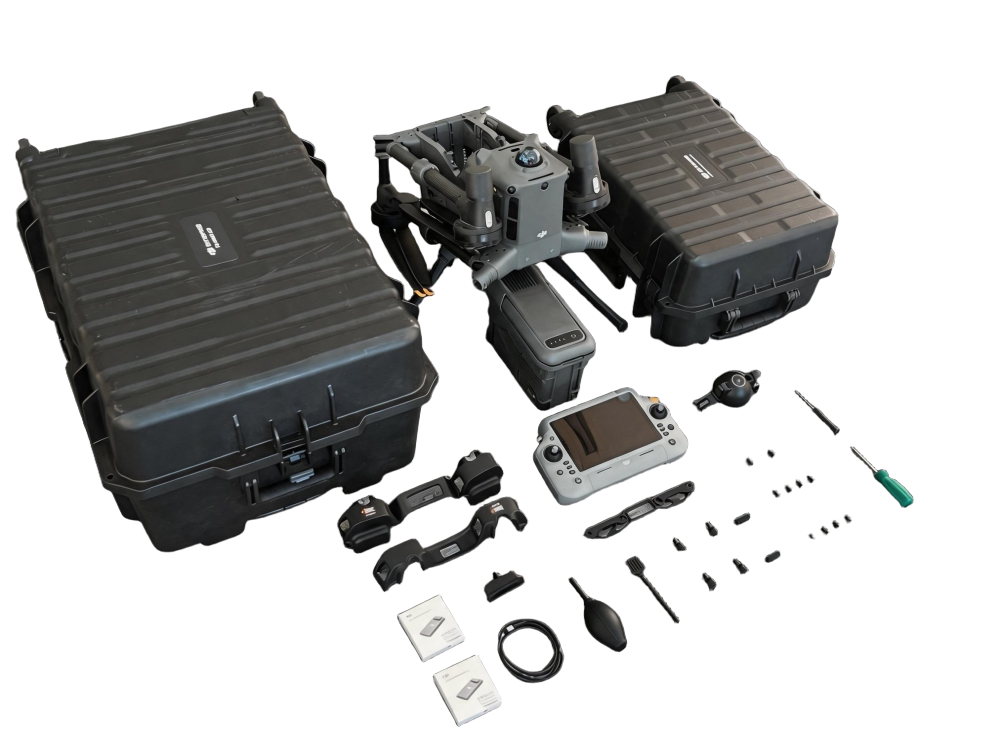
Industrial Application UAV
Aircraft Platform

Industrial Application UAV

Flight Platform

A configurable industrial UAV platform with up to 6 kg effective payload, RTK positioning, dual mounting capability, and environmental protection for demanding cleaning operations.

View Product ↗
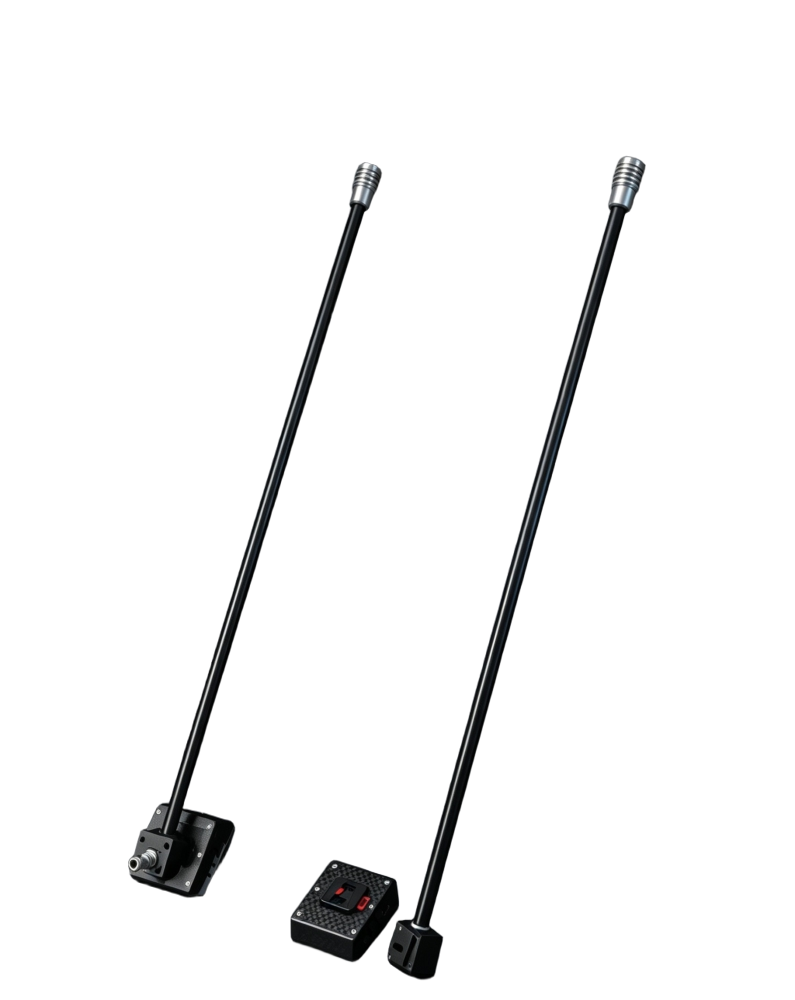
M400 Cleaning Mount ZX-01 Spray Boom
Cleaning Payload

M400 Cleaning Mount / ZX-01

Aircraft-Side Cleaning Payload

A lightweight fixed-angle spray boom designed for M400 cleaning applications, combining carbon-fibre construction, quick installation, and M14 quick-connect integration.

View Product ↗
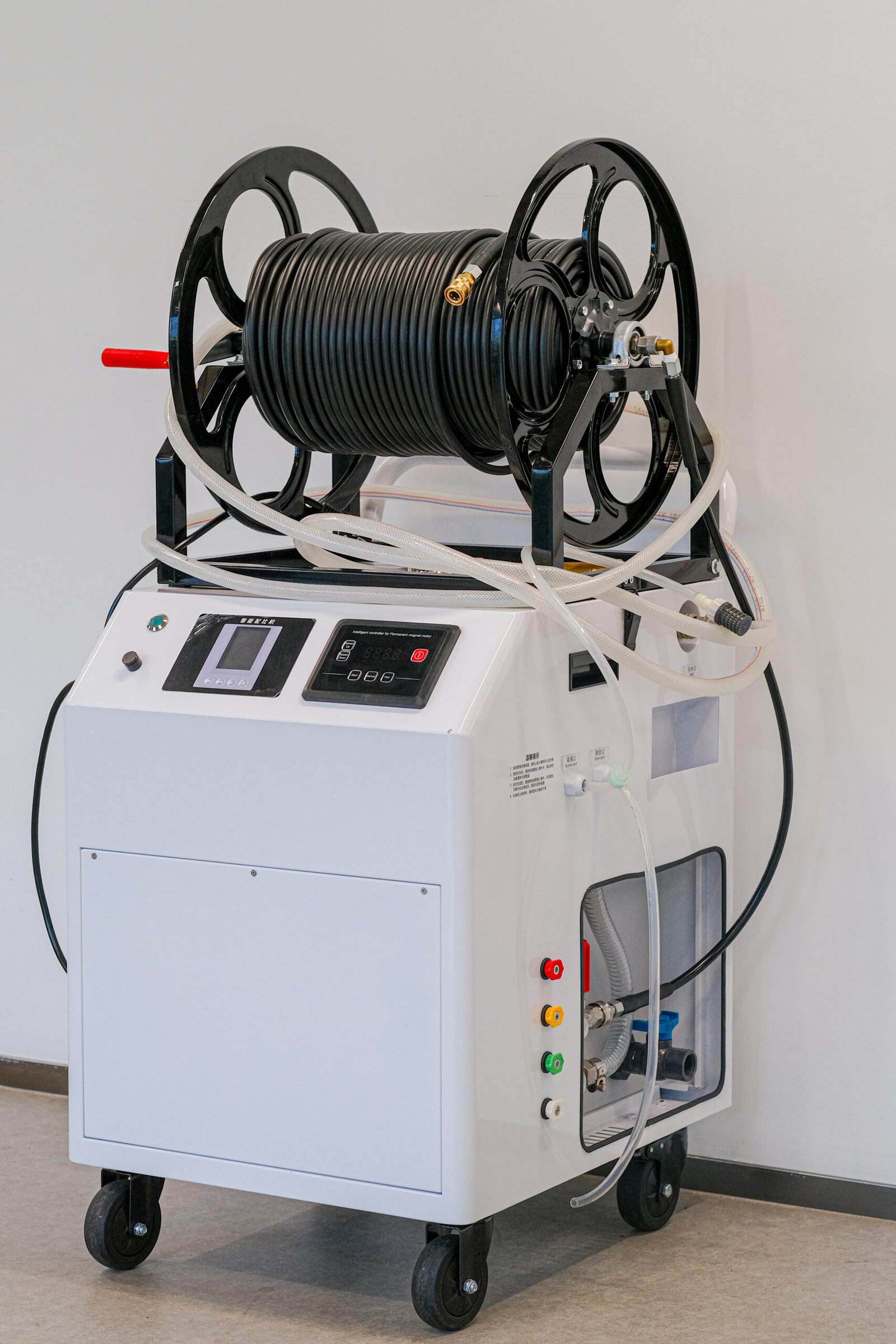
ZX003 Intelligent Proportioning Cleaning Unit
Ground Support

ZX003 Intelligent Proportioning Cleaning Unit

Ground-Side Supply

A mobile ground-side cleaning unit integrating water storage, automatic chemical proportioning, high-pressure cleaning control, and hose supply for UAV cleaning systems.

View Product ↗
Project Inputs

What should you send us?

You do not need a finished technical specification. These basic site details are enough to begin system matching.

01 Building height and approximate cleaning area
02 Facade drawings, photos, or exterior geometry
03 Surface material and contamination type
04 Available water, power, and ground operating area
05 Existing UAV model, if one is already available